What is mass?
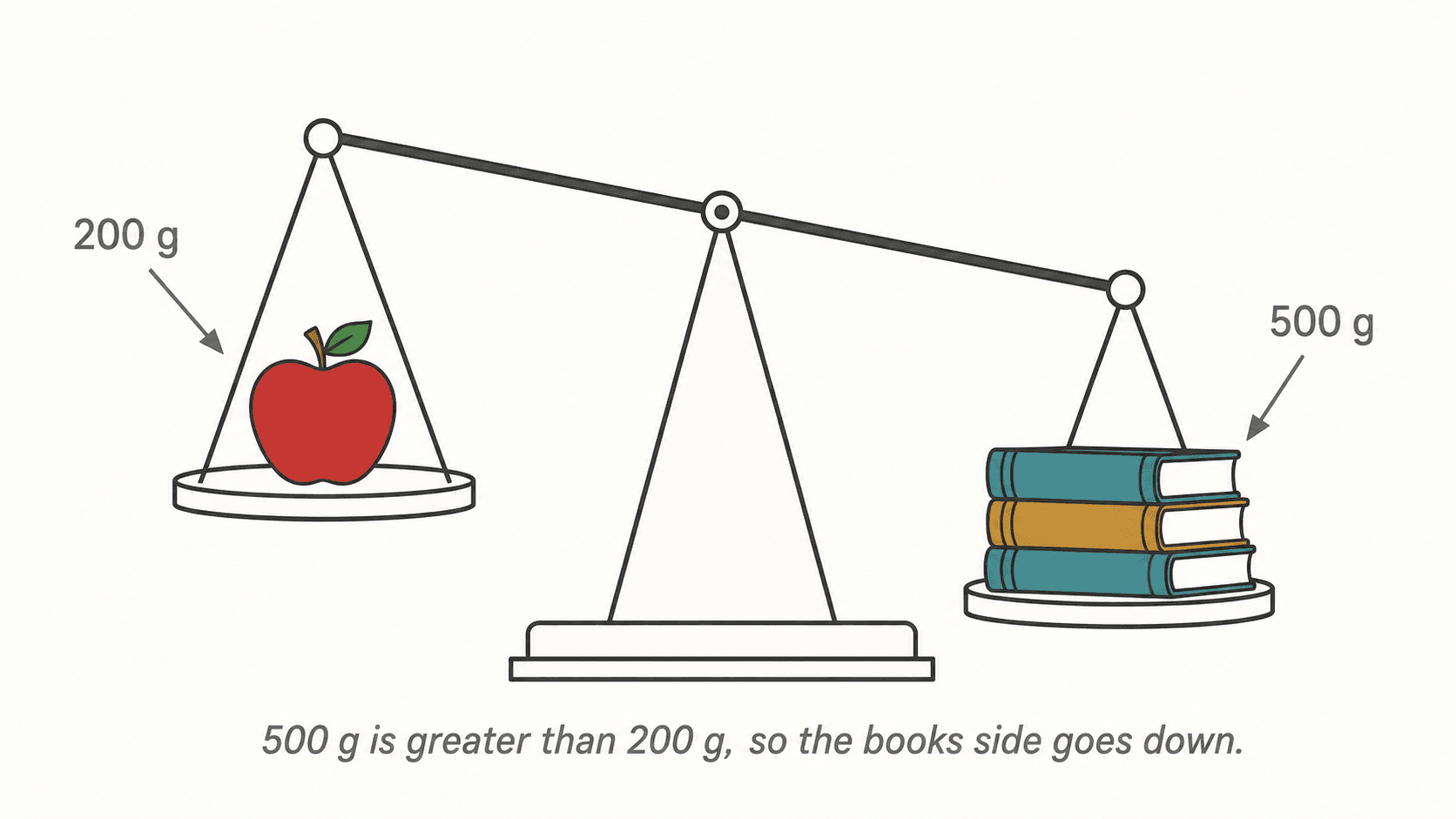
Mass is the amount of matter in an object. It is measured with a balance and expressed in kilograms (kg) or grams (g). Mass does not change depending on location: an apple that has a mass of 200 g on Earth has the same mass on the Moon.
Do not confuse mass with weight, which is a force caused by gravity and varies depending on the planet.
What is volume?
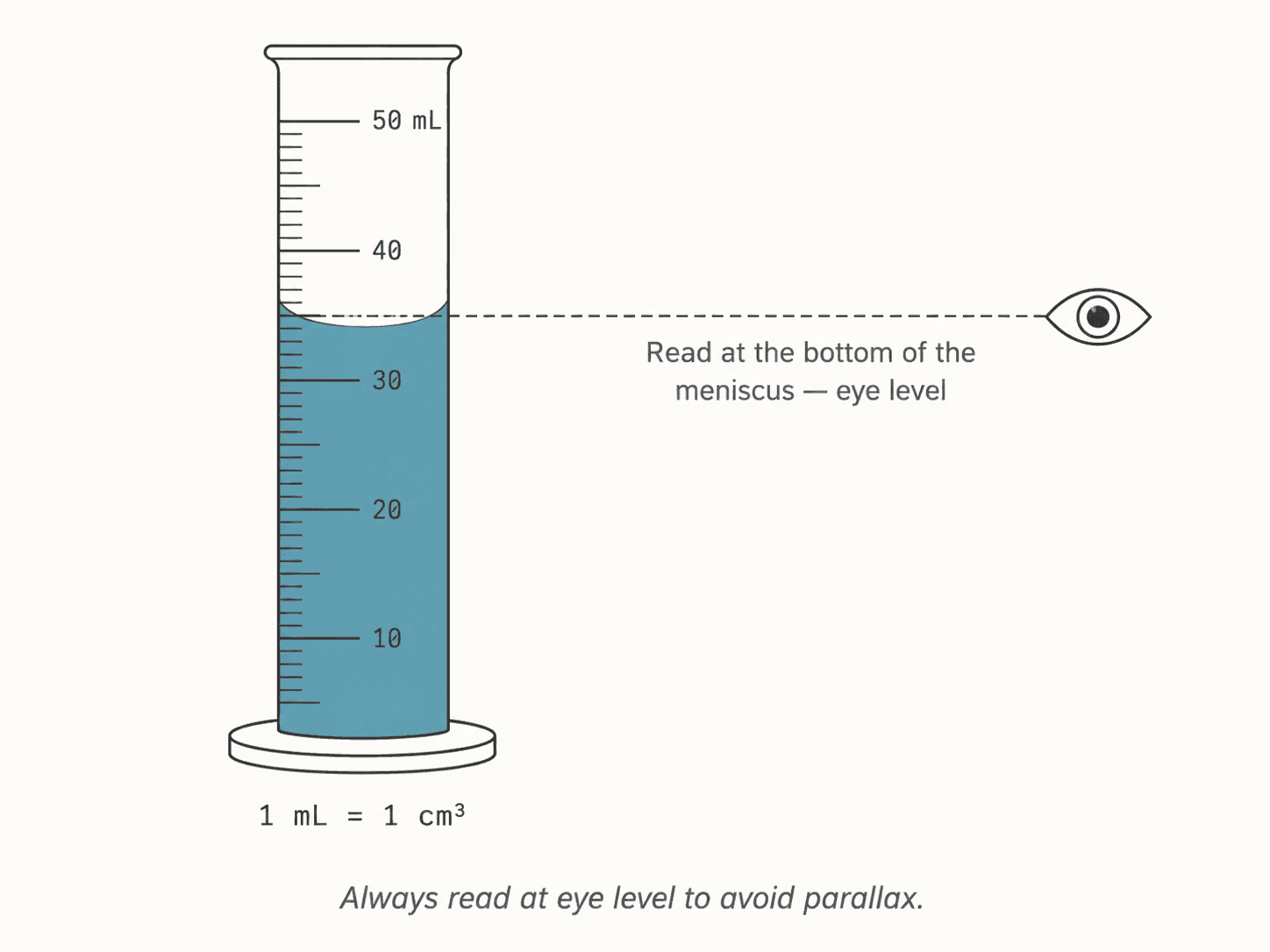
Volume is the space occupied by an object or a liquid. It is expressed in litres (L), millilitres (mL), or cubic centimetres (cm³). Note that 1 mL = 1 cm³.
To measure the volume of a liquid, use a graduated cylinder. For an irregular solid (like a pebble), use the water displacement method: submerge the object in water and measure how much the water level rises.
Density: a characteristic property
Density (written ρ, the Greek letter "rho") links the mass and volume of a substance:
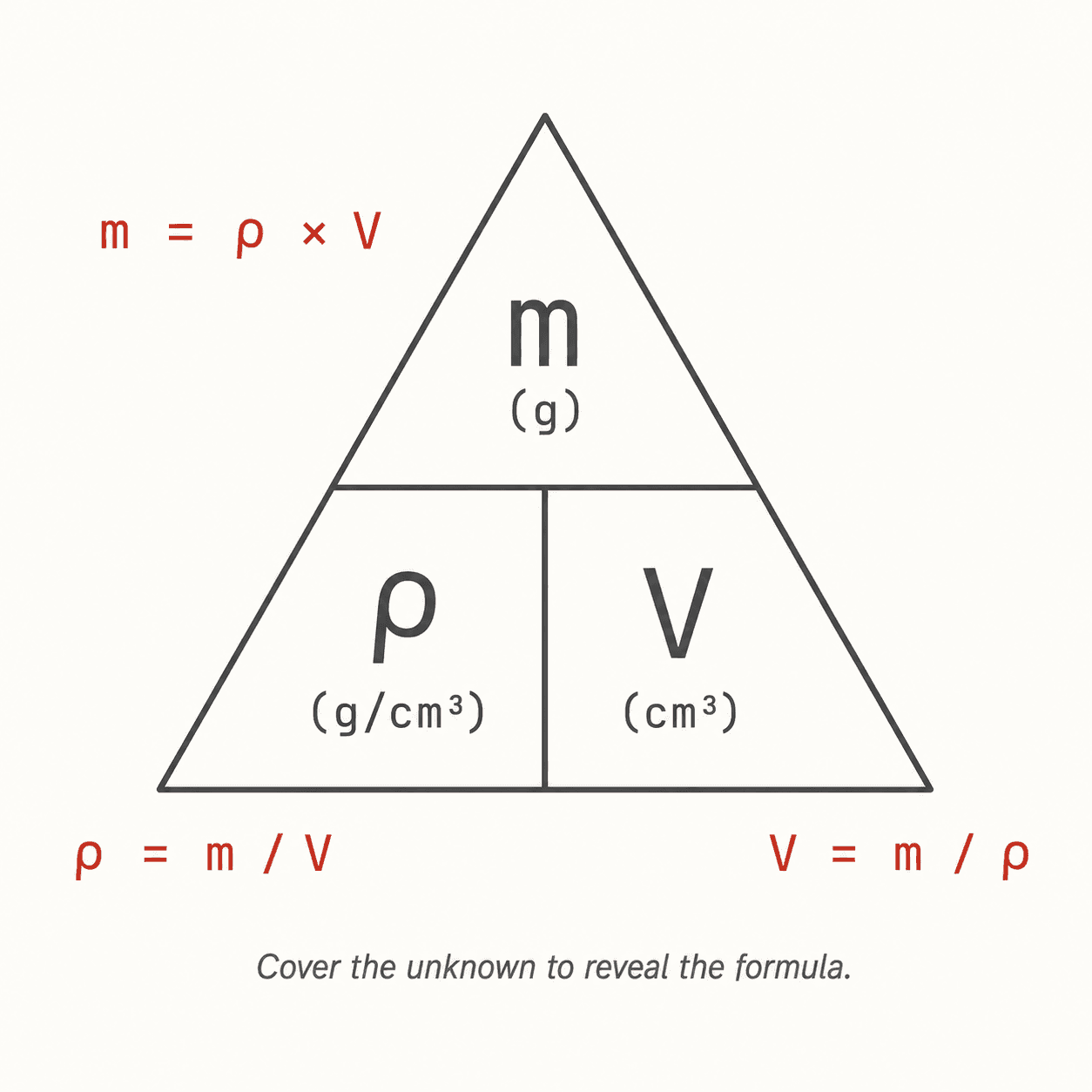
ρ = m / V
where m is the mass (in g) and V is the volume (in cm³ or mL). Common units are g/cm³ or g/mL.
Density is a characteristic property: it identifies a substance regardless of the quantity. Two pieces of pure iron will always have ρ ≈ 7.87 g/cm³, whether it is a nail or a 10 kg bar.
Why do objects float or sink?
An object floats in a liquid if its density is lower than the liquid's density. That is why ice floats on water (ρ_ice = 0.92 g/cm³ < ρ_water = 1.00 g/cm³), and why oil sits on top of water.
Conversely, an iron nail sinks because ρ_iron = 7.87 g/cm³ > ρ_water.
Three formulas from one
From ρ = m / V, we can derive: - m = ρ × V (find mass from volume and density) - V = m / ρ (find volume from mass and density)
Example: what is the volume of 500 g of iron? V = 500 / 7.87 ≈ 63.5 cm³
Finished this lesson?