What is combustion?
Combustion is a chemical reaction between a fuel and an oxidiser (usually dioxygen from the air). This reaction releases energy in the form of heat and sometimes light.
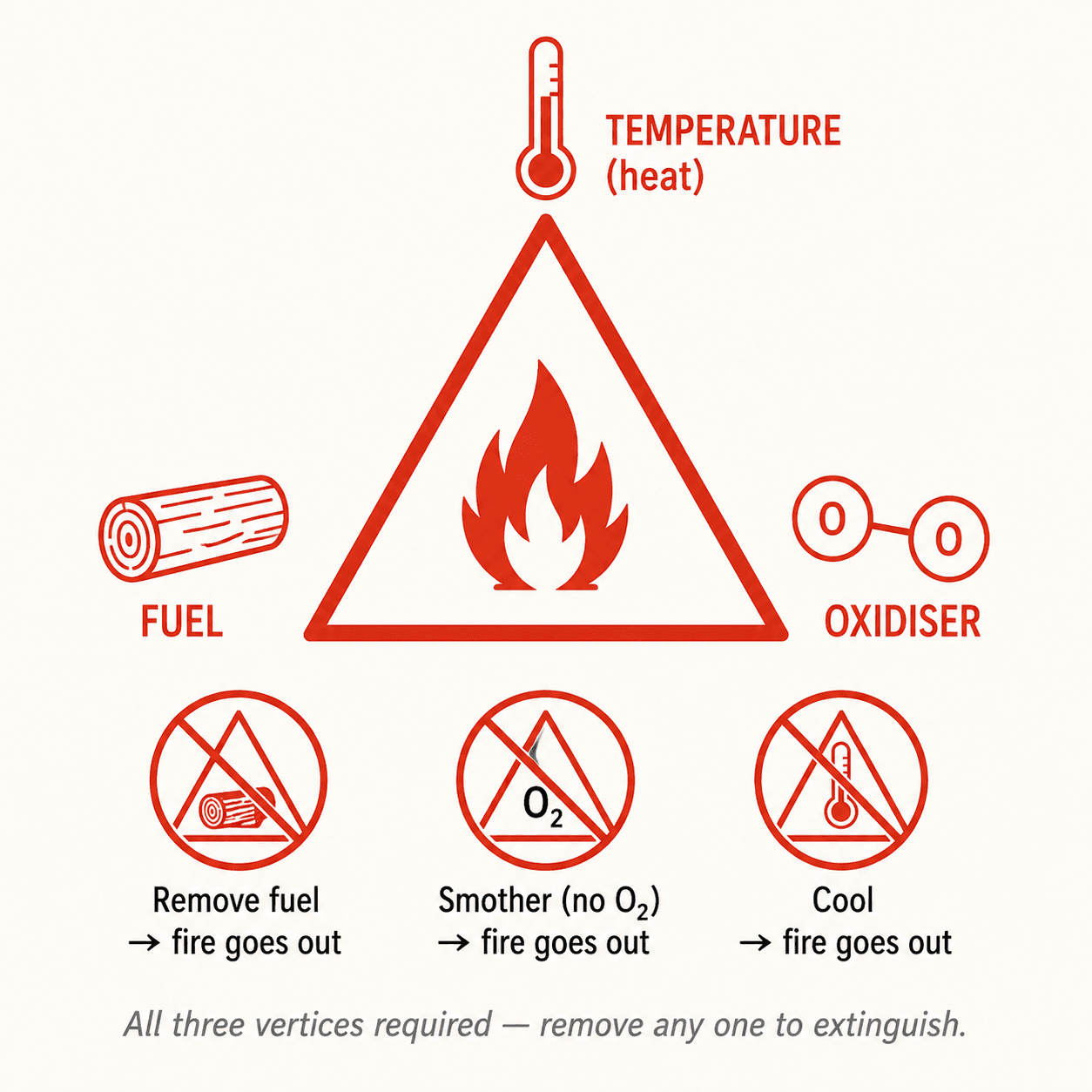
Conditions for combustion to start: - presence of a fuel; - presence of an oxidiser (dioxygen); - a sufficient temperature (ignition point).
If any one of these three conditions is absent, combustion stops. This is the fire triangle principle.
Complete combustion of carbon
When carbon burns with plenty of dioxygen (complete combustion), the only carbon-containing product is carbon dioxide CO₂:
C + O₂ → CO₂
CO₂ can be detected by limewater, which turns cloudy.
Incomplete combustion: carbon monoxide
If dioxygen is limited, combustion is incomplete. Carbon monoxide CO forms — a colourless, odourless, extremely toxic gas:
2 C + O₂ → 2 CO
This is why leaving an engine running in a closed garage is dangerous.
Combustion of methane
Methane (CH₄) is the main component of natural gas used for cooking and heating. Its complete combustion produces CO₂ and water:
CH₄ + 2 O₂ → CO₂ + 2 H₂O
| Fuel | Products (complete) | Products (incomplete) |
|---|---|---|
| Carbon (C) | CO₂ | CO + C (soot) |
| Methane (CH₄) | CO₂ + H₂O | CO + H₂O (+ soot) |
| Iron (Fe) | Fe₃O₄ (magnetite) | FeO (ferrous oxide) |
Combustion of iron
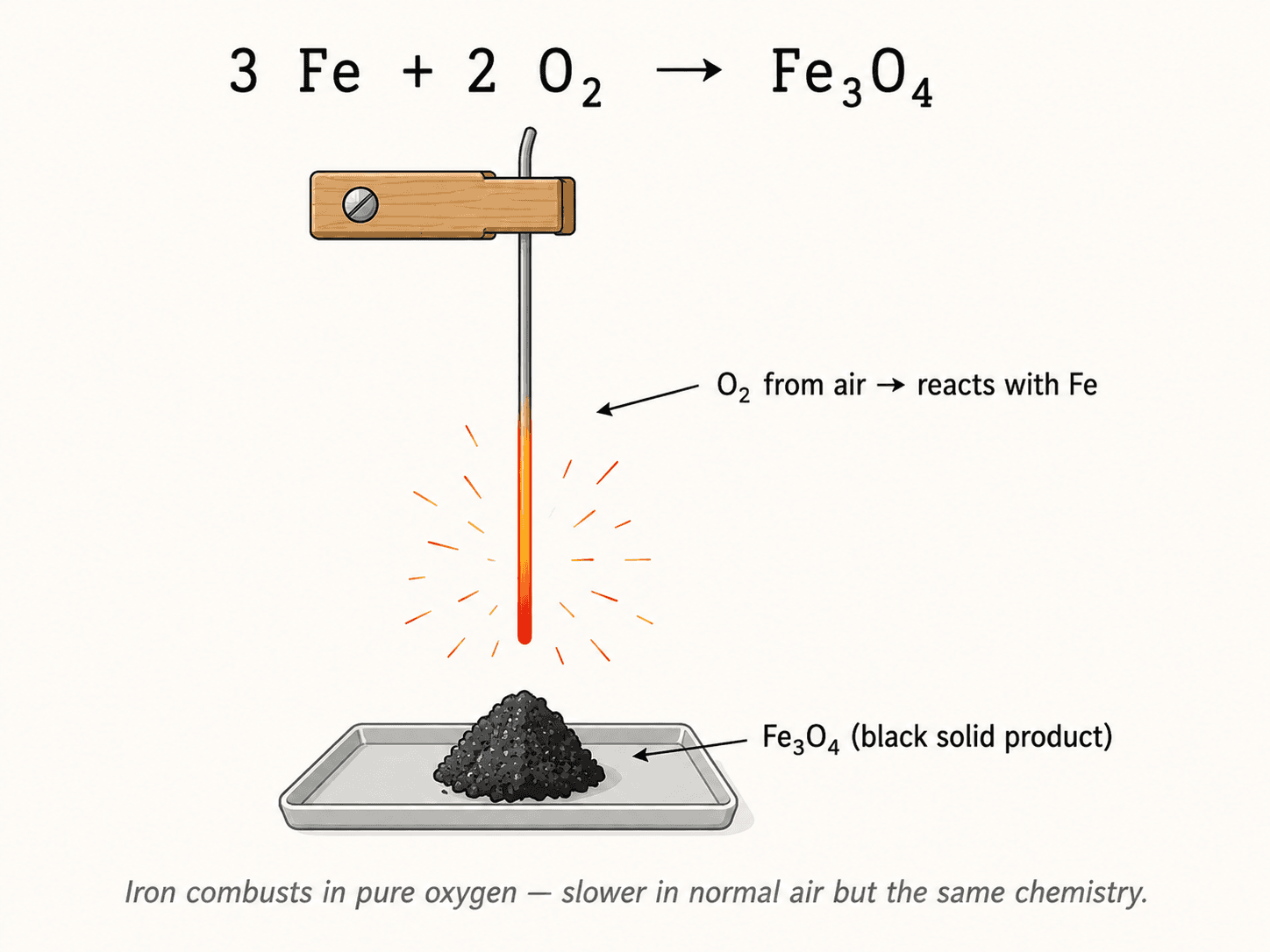
The combustion of iron (Fe) in pure dioxygen is spectacular: sparks fly and a dark brown-black solid forms, magnetite (Fe₃O₄) or iron oxide:
3 Fe + 2 O₂ → Fe₃O₄
Environmental impact
Burning fossil fuels (coal, oil, gas) releases large amounts of CO₂ into the atmosphere, contributing to climate change. CO₂ is a greenhouse gas that traps solar heat. Reducing combustion and developing renewable energy are major challenges of the 21st century.
Finished this lesson?